How to use domestic large models for space exploration and scientific discovery?
When conducting space exploration and scientific discovery, domestic large models can provide core support through efficient data processing, complex scenario simulation, intelligent task planning, and scientific law mining, serving as a key tool connecting massive space data with scientific research breakthroughs.
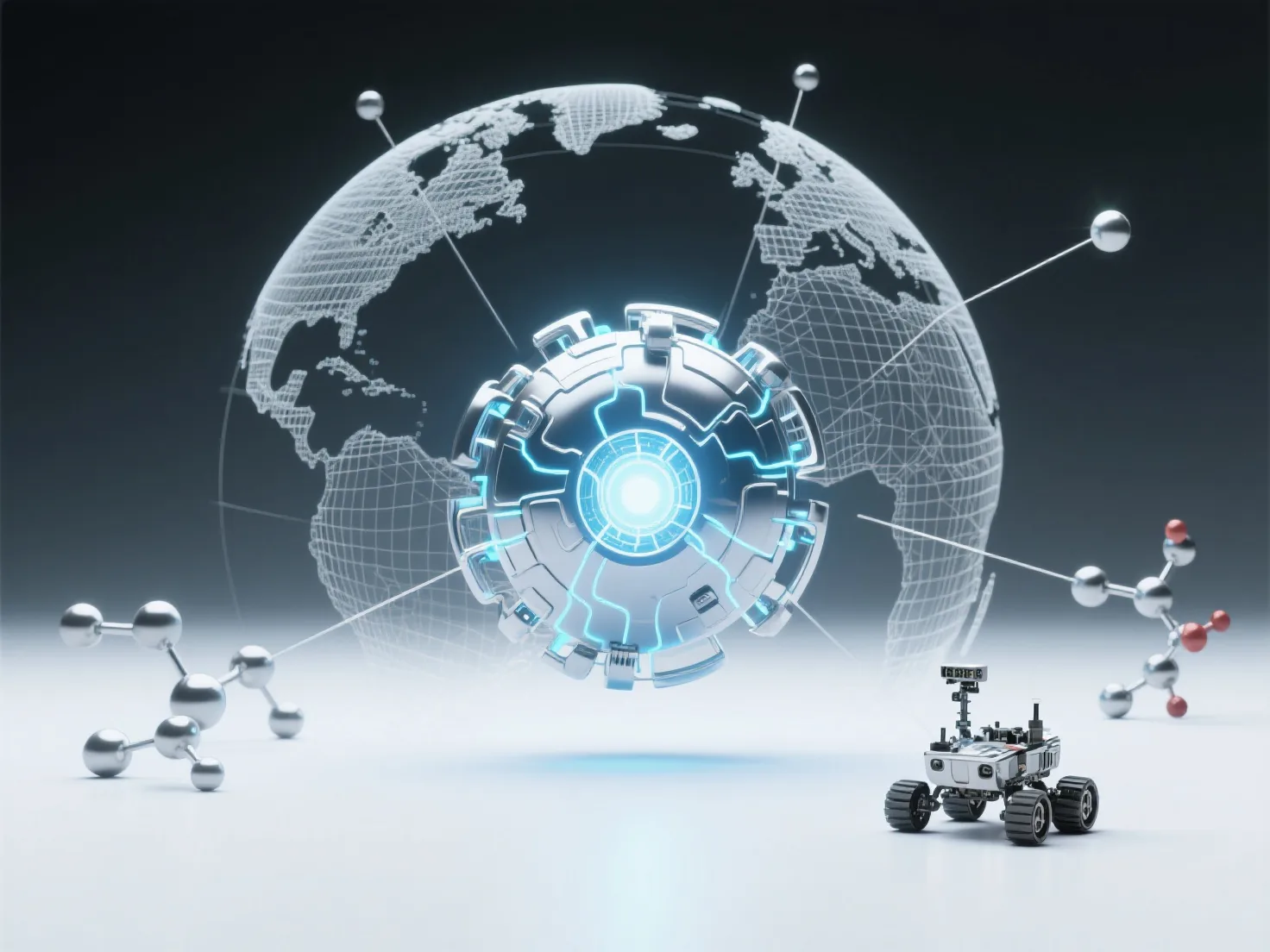
Core answer
Answer
When conducting space exploration and scientific discovery, domestic large models can provide core support through efficient data processing, complex scenario simulation, intelligent task planning, and scientific law mining, serving as a key tool connecting massive space data with scientific research breakthroughs.
Data Processing and Analysis: Space missions (such as satellite remote sensing and deep space exploration) generate massive amounts of data including images, spectra, and particle detection. Domestic large models can quickly identify celestial structures, abnormal signals, or resource distribution, for example, analyzing the topographical features of the Martian surface through multimodal models.
Simulation and Prediction: For complex systems such as cosmic evolution and planetary atmospheric circulation, large models can construct high-precision simulation scenarios to predict spacecraft orbit decay, solar storm impacts, etc., assisting in mission risk assessment.
Task Planning Optimization: In probe path design, energy allocation, and fault diagnosis, large models can optimize plans based on historical mission data, improving task execution efficiency and success rate.
Scientific Discovery Assistance: Through in-depth mining of astronomical observation data, large models can assist researchers in discovering new celestial bodies, gravitational wave signals, or physical laws, shortening the cycle from data to discovery.
It is recommended that research teams select domestic large models with multimodal processing capabilities based on specific exploration goals (such as deep space exploration, astrophysical research) and focus on the domain adaptability of training data to more efficiently promote breakthroughs in space science.
Keep exploring